


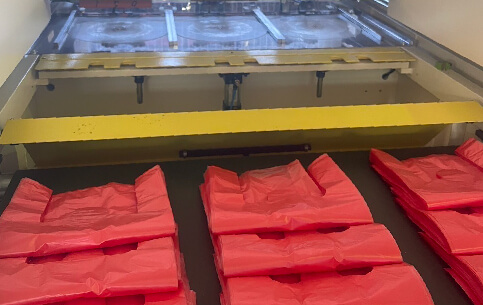




Bag on Roll Machine Guide: Types, Specs & How to Choose
2026-08-14


A bag on roll machine falls into one of three core configurations — coreless, with a paper core, or draw tape — and each one is built around a different production trade-off, not just a different look. Buyers who compare machines on price alone before confirming automation level, film thickness, and export certification often find out the hard way, once the line is already running below the output they budgeted for. This guide walks through the main machine types, the factors that actually separate a good investment from a costly one, and a step-by-step framework you can use before you request a quote.
What Is a Bag on Roll Machine?
A bag on roll machine is industrial equipment that seals, perforates, and rewinds continuous plastic film into rolls of individually tearable bags. It is called “bag-on-roll” because the finished product ships as a roll rather than as loose, stacked bags — the format most familiar from supermarket produce bags and household garbage bag rolls. The machines are used across food and beverage, retail, hospitality, and industrial packaging, and come in two broad configurations: stand-alone units built around a single function, and integrated systems that combine sealing, perforating, and rewinding in one continuous line.
Main Types of Bag on Roll Machines
Most buyers narrow their search to one of three configurations. The right one depends on how the finished roll needs to hold together, not on price alone.
1. Coreless Bags on Roll Machine
A coreless machine holds the roll together using the bags themselves, with no separate paper or plastic core at the center. Removing the core-attachment step is what makes coreless lines well suited to high-volume production, since there is one less handling stage between film and finished roll.
Chao Wei's Perforated Coreless Bags on Roll Machine with Double Rewinding Shafts is a fully automatic high-speed perforating coreless machine with a double-shaft rewinder for HD loose-roll production. It runs a German-made SICK photocell for print-mark registration and a Japan-made servo motor and drive/inverter, with C-type or E-type folding, table-cover, and flat- or gusseted-bottom sealing options.

2. Bags on Roll with Core Making Machine
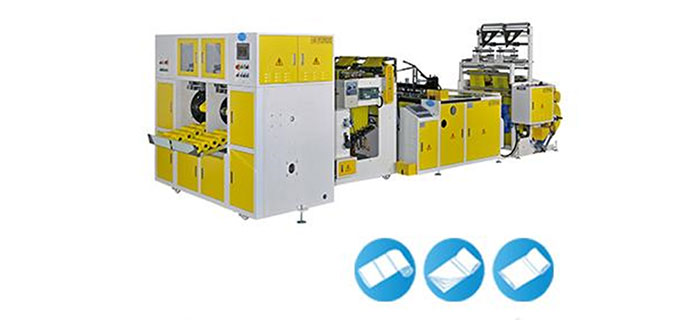
A with-core machine winds finished bags around a paper core placed at the center of the roll. The line combines a bag-making unit and a rewinding unit into one process, and the core gives the finished roll a fixed, dispenser-ready shape — a common requirement for retail and foodservice dispensing systems.
The 2 Lines Perforated Bags on Roll Machine with Core runs two lines with a servo-controlled core-changing device, precise bag-length control via touch screen, two German-made photocells for print-mark accuracy, in-line triangle folding, and automatic lift-up reel unwinders with air shafts that reduce operator handling. Automatic tension control with AC motors and inverters keeps the film roll tension stable across a full production run.
3. Fully Automatic Perforating Draw Tape Bags on Roll Machine
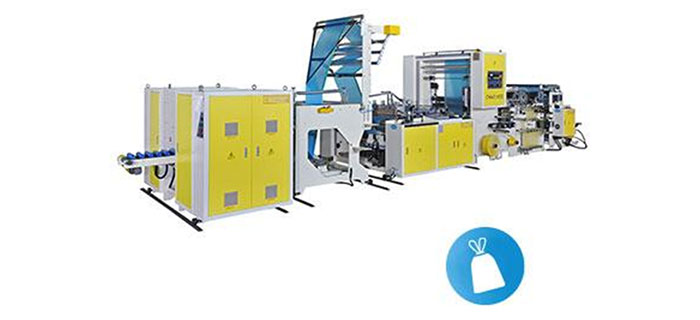
A draw tape machine adds a pull-string closure at the top of each bag, most often seen on garbage bags that need to be sealed shut after use. Perforation between bags allows each one to separate cleanly by hand.
The Shuttle Type Perforated Coreless Draw Tape Bags on Roll Machine produces side-sealed, perforated draw tape garbage bags on a Japan-made servo-driven system built for stability at high speed. It includes a continuous hot-air sealing device, a draw tape inserting unit with double unwinding stations and automatic roll changeover, and a servo-driven shuttle-type sealing and perforating unit for consistent registration.
Comparison at a Glance
The table below summarizes how the three configurations differ on the factors buyers ask about most often before requesting a quote.
| Feature | Coreless | With Core | Draw Tape |
|---|---|---|---|
| Roll structure | Self-supporting, no core | Wound on paper core | Self-supporting, drawstring top |
| Best fit for | High-volume loose-roll production | Retail / foodservice dispensers | Garbage bags needing a closure |
| Typical film thickness | 0.015–0.035mm | 0.012–0.035mm | 0.015–0.04mm |
| Typical output speed | 60–100 M/min | 100 M/min | 100 M/min |
| Key control feature | SICK photocell + servo drive (CWAP+CS-SV); other coreless configurations available | Servo core-changing device (CW-800PR-SV / CW-1000PR-SV) | Servo shuttle sealing unit (CW-1200PDR-SV) |
Key Factors to Consider When Choosing a Bag on Roll Machine
Five factors decide whether a bag on roll machine earns back its cost or turns into a bottleneck within the first year of operation.
Production Speed
Output speed is set by the interaction of three things: the type and thickness of the film, the feeding length per bag, and how complex the bag style is (a plain bottom-seal bag runs faster than a draw-tape bag with an inserted string). A machine rated for high speed on thin retail film will not necessarily hold that speed on a thicker industrial film.
Degree of Automation
Fully automatic machines complete the entire bag-making cycle without operator intervention; semi-automatic machines still require manual steps at one or more stages. Fully automatic lines cost more up front, but they run continuously without the frequent stops that eat into daily output — and they can usually be fitted with an add-on unit for applying self-adhesive labels to finished rolls.
Electronic Control System
A stable control system is what keeps bag length, sealing, and rewinding consistent from the first roll of a shift to the last. Consistent output is what actually reduces cost over time — every out-of-spec bag is wasted film and wasted machine time, not just a cosmetic defect.
Film Thickness and Certification Compatibility
Confirm the machine's rated film-thickness range against the material you plan to run, and confirm the certification requirements of the country where the machine will be installed before ordering.
Most of Chao Wei's established machine models already carry CE certification. For newer models, CE compliance and certification are arranged to order whenever the destination country's regulations require it — worth confirming at quote stage rather than assuming it as a default.
Technical Support
Support matters because these are specialized, complex machines that need regular maintenance to keep running at spec. A good support relationship — whether direct from the manufacturer or through an authorized dealer — resolves problems faster and keeps small issues from becoming downtime.
Chao Wei has been in business for over 40 years, and it is common for a Chao Wei machine to still be in daily operation after 15 years of service. That track record comes from component quality and a support team that has handled the same machine families for decades, not from a single standout unit.
A 5-Step Framework for Choosing the Right Machine
Work through these five questions before comparing suppliers or requesting quotes — in this order, since each answer narrows the next.
- Define your bag style. Coreless, with-core, and draw tape solve different end-use problems — pick based on how the bag will actually be dispensed or used, not on what a competitor runs.
- Define your film type. HDPE, LDPE, and biodegradable films each behave differently under tension and heat, and that determines which sealing system fits your chosen bag style.
- Define your required output speed. Set a realistic bags-per-minute target based on your actual order volume, not the highest number a supplier quotes.
- Define your automation level. Weigh the higher upfront cost of a fully automatic line against the labor and downtime cost of a semi-automatic one over its service life.
- Confirm certification and support. Check CE, UL, CSA, or other requirements for the country where the machine will operate, and confirm what after-sales support the manufacturer actually provides — before signing, not after.
Common Mistakes Buyers Make
Buyers who run into trouble after installation usually made one of the same handful of decisions during the selection process.
- Choosing on price alone, without weighing engineering depth or component quality
- Underestimating the automation level the actual order volume requires
- Skipping certification checks for the destination country until after ordering
- Not confirming what after-sales technical support is actually included
Applications of Bag on Roll Machines
A bag on roll machine's output changes shape with the industry it serves — the same core mechanism produces four distinct bag categories.
Garbage Bags
Garbage bags on roll — draw tape, star-sealed, or flat/gusseted-bottom with folding — are one of the highest-volume applications, driven by the need for consistent sizing across large production runs.

Retail Bags
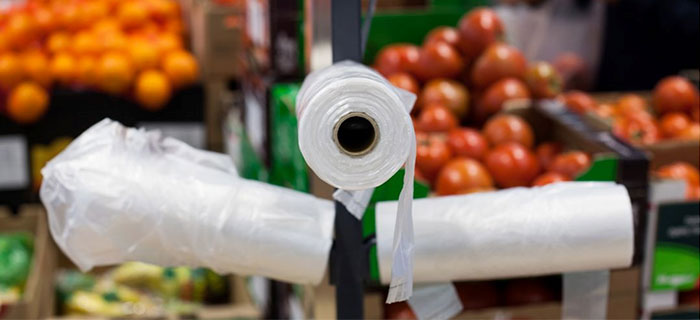
Retail applications include vegetable bags, T-shirt bags, and flat or gusseted-bottom sealed bags used in grocery stores and other retail settings where shoppers bag their own purchases.
Plastic Laundry Bags
Perforated laundry bags on roll, sealed flat rather than sloped-shoulder, are used by commercial laundries and dry-cleaning shops, where staff tear off one bag at a time to package pressed or laundered items for customer pickup.
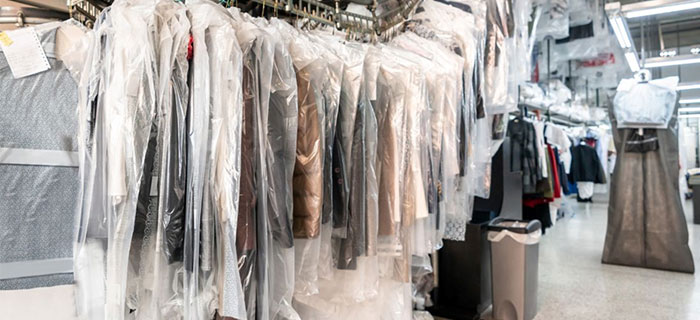
Table Covers and Tablecloths
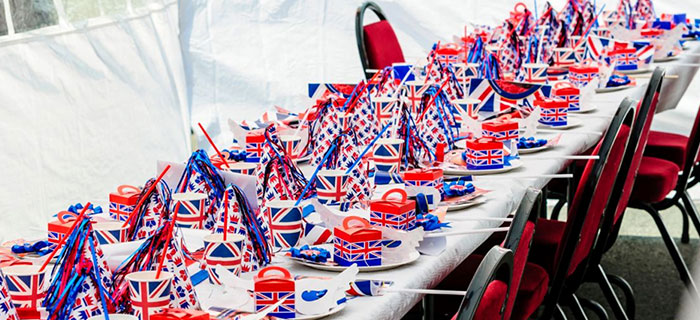
Disposable plastic table covers are widely used at banquets, picnics, outdoor events, and restaurants — notably in Middle Eastern markets. A bag on roll machine suits mass production of table covers because the same high-speed, consistent-output mechanism that makes bags applies directly to sheet-form products.

Real-World Reliability: A Case in Point
Specification sheets describe what a machine can do; a customer still running the same unit after a decade and a half shows what it actually does under real production conditions. Three installations make the point:
- Saudi Arabia — a CWAP+C machine in continuous operation since 2004 (22+ years)
- Colombia (Cali) — a CWAP machine in continuous operation since 2002 (24+ years)
- Colombia (Bogotá) — a CWAAP machine in continuous operation since 2008 (18+ years)
These installations span two very different export markets — the Middle East and Latin America — and all three are still running the same core machine families well beyond the fifteen-year mark.
Maintenance and Troubleshooting
Regular maintenance is what keeps a bag on roll machine running at its rated speed and output quality over its full service life.
- Lubricate all moving parts on the schedule the manufacturer specifies, to reduce friction and wear
- Inspect belts and cables regularly for wear or damage, and replace them before they fail
- Check rollers and other key components for wear, and replace as needed rather than waiting for a breakdown
Frequently Asked Questions
1. What is a bag on roll machine used for?
It produces continuous rolls of perforated plastic bags for garbage bags, retail bags, laundry bags, table covers, and similar high-volume packaging applications.
2. What's the difference between a coreless and a with-core bag on roll machine?
A coreless machine holds the roll together using the bags themselves; a with-core machine winds the roll around a paper core, giving it a fixed shape suited to dispenser systems.
3. What factors affect the price of a bag on roll machine?
Price scales mainly with automation level, output speed, film-thickness range, and the control and servo systems fitted — not just the base bag style. A fully automatic, high-speed line with servo-driven registration costs more than a semi-automatic unit, but typically costs less per bag over its service life.
4. How do I choose between fully automatic and semi-automatic models?
Match the choice to order volume and labor cost: fully automatic lines suit continuous, high-volume production, while semi-automatic lines can be the more economical choice at lower or more variable volumes.
5. What certifications should a bag on roll machine have for export markets?
Requirements vary by destination — CE for the European market and UL or CSA for North America are the most commonly requested. Most of Chao Wei's established models already carry CE certification, and certification for newer models can be arranged to order to meet the destination country's requirements — confirm this with the manufacturer before ordering.
Why Work With Chao Wei
Chao Wei has manufactured bag on roll machines and related bag-making equipment for more than 40 years, and our commitment to customer feedback is a specific design habit, not a slogan: production adjustments and new features regularly originate from what customers report from the field. We offer configurations across coreless, with-core, and draw tape lines to match the automation level and film range a given order requires.
To review specific models in detail, see our plastic bag making machines page, or contact us directly to discuss your production requirements.

_cw-pdr-sv_pic.jpg)
_cw-800pr-sv_pic.jpg)
_cwap+cs_pic.jpg)
With over 40 years of experience
Our goal is to manufacture high quality machines and provide fast after sales-service to customers.